Demystifying OM4 Multimode Fiber: Unraveling the Secrets of High-Speed Connectivity.
In the realm of networking and data transmission, the choice of fiber optic cable can make a significant difference in terms of speed and reliability. Among the various options available, OM4 multimode fiber stands out as a high-performance connectivity solution. However, what exactly is OM4 multimode fiber and why is it receiving so much attention in the networking industry? Let's take a journey to uncover the secrets of OM4 multimode fiber and explore its importance in today's digital landscape.

Understanding Fiber Optic Cables
To understand OM4 multimode fiber, it's essential to have a basic understanding of fiber optic cables. Unlike traditional copper cables that use electrical signals for data transmission, fiber optic cables utilize light signals instead. This fundamental difference provides fiber optic cables with unmatched speed, bandwidth and reliability, making them a crucial component of modern networking infrastructures.
Fiber optic cables are composed of three layers - the core, cladding, and outer protective layer. The core is responsible for transmitting the light signals, while the cladding reflects the light back into the core, ensuring that the signals experience minimal loss. The outer layer serves as a protective barrier against environmental factors and physical damage.
What Sets OM4 Multimode Fiber Apart?
OM4 multimode fiber is a type of fiber optic cable that excels in short to medium-range applications, particularly in data centers, enterprise networks and high-speed computing environments. The acronym "OM" stands for "Optical Multimode," which refers to its capability of transmitting multiple light signals simultaneously through the fiber core.
OM4 multimode fiber stands out for its impressive bandwidth capabilities. Thanks to recent advancements in fiber optic technology, OM4 fiber can support higher data rates over longer distances than its predecessors. This superior bandwidth makes OM4 fiber an excellent choice for applications that demand fast data transmission such as cloud computing, virtualization and high-definition multimedia streaming.
The Advantages of OM4 Multimode Fiber
1. High-Speed Connectivity: OM4 multimode fiber supports high-bandwidth applications at speeds up to 10 GBPS over distances of up to 550 meters.
2. Future-Proofing: As technology evolves, faster data transmission is in demand. OM4 fiber future-proofs, supporting emerging tech and higher speeds.
3. Cost-Effective: OM4 multimode fiber is a cost-effective choice for many organizations as it strikes a balance between performance and affordability, while offering longer transmission distances compared to traditional multimode fibers.
4. Compatibility: OM4 fiber is backward compatible with previous generations of multimode fiber, allowing for seamless integration into existing network infrastructures without the need for costly upgrades.
5. Reliability: OM4 multimode fiber ensures reliable data transmission with minimal distortion and low signal attenuation, reducing the risk of network downtime and packet loss.
Applications of OM4 Multimode Fiber
The versatility of OM4 multimode fiber lends itself to a wide range of applications across various industries. Some common uses include:
1. Data Centers:OM4 fiber is commonly used in data centers to connect servers, storage devices and networking equipment, allowing for high-speed data transfers within the facility.
2. Enterprise Networks: Many businesses depend on OM4 fiber to support file sharing, video conferencing and cloud-based applications within their internal network infrastructure.
3. Telecommunications: Many businesses depend on OM4 fiber to support file sharing, video conferencing and cloud-based applications within their internal network infrastructure.
4. Education and Research: OM4 fiber is utilized by academic institutions and research facilities for high-performance computing tasks, collaborative projects and scientific experiments.
5. Healthcare: In the healthcare industry, OM4 fiber enables efficient delivery of patient care by supporting the transmission of medical imaging data, electronic health records and telemedicine applications.
Installation and Maintenance Considerations
Proper installation and maintenance are crucial for optimizing the performance and longevity of OM4 multimode fiber. Here are some key considerations:
1. Quality Assurance: OM4 fiber cables and components are subject to industry standards and rigorous testing to ensure optimal performance and reliability.
2. Proper Handling: It is important to handle OM4 fiber cables with care to prevent damage to the delicate glass fibers and connectors. Bending or twisting the cables beyond their recommended bend radius should be avoided.
3. Cleaning and Inspection: Inspect and clean connectors and mating surfaces regularly to remove contaminants that can degrade signal quality.
4. Documentation: Maintain detailed records of the OM4 fiber installation, including cable routes, splice locations and connector types to facilitate troubleshooting and future upgrades.
5. Training and Certification: It is important to provide proper training and certification to personnel who install and maintain OM4 fiber networks to ensure safe and effective handling of equipment and tasks.
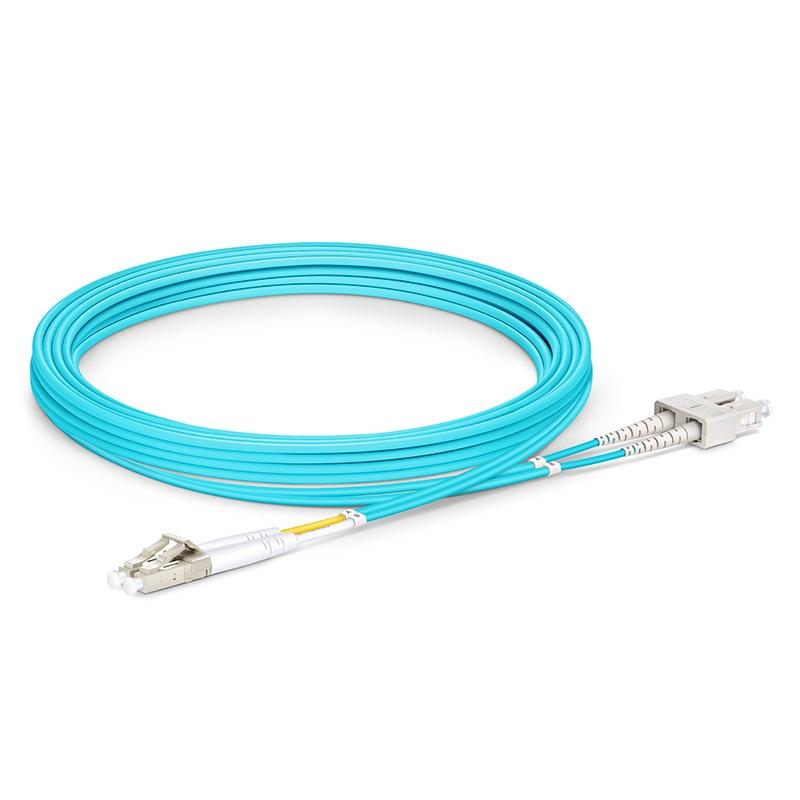
Conclusion: Embracing the Power of OM4 Multimode Fiber
The current era is characterized by digital transformation and an exponential growth of data. As a result, there is an increased need for reliable and high-speed connectivity. OM4 multimode fiber is at the forefront of this technological revolution, providing a strong solution for organizations that want to benefit from the power of optical networking.
OM4 fiber is a highly versatile and high-performance option that's widely used in various applications such as data centers, enterprise networks, telecommunications, and healthcare systems. By adopting best practices for installation and maintenance, organizations can realize the full potential of OM4 multimode fiber and create a faster, more interconnected future.
.jpg)


Comments
Post a Comment