GBIC: Exploring the Power of Gigabit Interface Converters
Introduction
In the world of networking and data communication, the efficient and seamless transfer of data is crucial. Businesses, organizations, and individuals rely heavily on high-speed and reliable network connections to ensure smooth operations. One technology that plays a significant role in achieving this is the Gigabit Interface Converter, commonly known as GBIC. In this blog, we will delve into the world of GBIC, its functionalities, applications, and the impact it has had on modern networking.

What is GBIC?
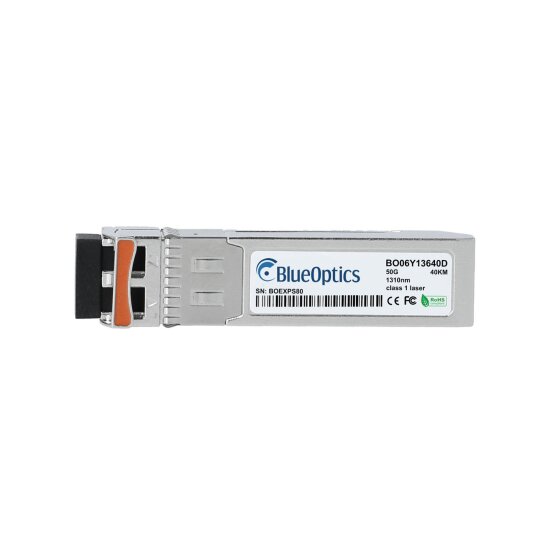
Gigabit Interface Converter (GBIC) is a hot-swappable, versatile transceiver used in networking equipment, primarily to interface gigabit Ethernet ports with different types of network media. It was first introduced in the late 1990s as a standardized module to provide flexibility and ease of use in network devices. GBICs are compliant with the Gigabit Interface Specification (GBIC) standard, ensuring compatibility across various networking equipment.
GBICs allow seamless communication between network devices and enable the transmission of data over various media, such as optical fibers, copper cables, and twisted-pair cables. This flexibility is achieved by offering different GBIC types, each tailored for specific transmission requirements, distances, and network media.
Evolution and Types of GBICs
Over time, GBIC technology has evolved to accommodate different network media and data rates. Initially, GBICs were designed to support Gigabit Ethernet (1 Gbps) over copper or fiber-optic cables. As networking demands increased, so did the need for higher data rates. This led to the development of several GBIC variants, including:
- 1000BASE-SX: This GBIC type supports short-range multimode fiber, commonly used for distances up to 550 meters. It is an ideal choice for connections within data centers or office buildings.
- 1000BASE-LX: For long-range connections over single-mode fiber, the 1000BASE-LX GBIC is the go-to choice, reaching distances of up to 10 kilometers. It is commonly used in telecommunications and metropolitan area networks.
- 1000BASE-T: This GBIC type enables connections over standard copper twisted-pair cables (Cat 5e or Cat 6) at distances of up to 100 meters. It is widely used in enterprise networks and small office setups.
 Advantages of GBICs
GBICs have several advantages that make them a preferred choice in networking environments:
- Interoperability: GBICs adhere to an industry-wide standard, ensuring compatibility across various networking equipment and vendors. This standardization simplifies network design and facilitates the integration of different devices.
- Hot-swappability: GBICs are hot-swappable, meaning they can be inserted or removed from a network device without shutting down the system, making upgrades and replacements hassle-free. This feature significantly reduces downtime and enhances network flexibility.
- Flexibility: With multiple types of GBICs available, network administrators can adapt to different networking environments by simply swapping out GBICs rather than replacing entire modules or devices. This modularity is cost-effective and efficient for scaling network capabilities.
- Cost-effective: GBICs offer a cost-effective solution for network scalability, allowing businesses to expand their network capabilities without significant infrastructure investments. Instead of replacing entire devices, administrators can upgrade by replacing or adding GBICs as needed.

Applications of GBICs
GBICs find extensive use in various networking scenarios. Some of the key applications include:
- Data Centers: In large data centers, where network equipment needs to handle diverse networking requirements, GBICs provide the flexibility to connect with different media types. They allow data centers to adapt to changing demands efficiently.
- Telecommunication Networks: Telecommunication providers utilize GBICs to deliver high-speed internet services to consumers and businesses, ensuring reliable connectivity over various distances. GBICs play a crucial role in backbone networks, connecting multiple locations.
- Enterprise Networks: Large enterprises with extensive network infrastructure can benefit from GBICs to streamline network expansion and optimize performance. GBICs make it easier to upgrade existing equipment without disrupting daily operations.
- Campus Networks: Educational institutions and corporate campuses utilize GBICs to build robust and scalable networks that cater to their evolving needs. The ability to use different media types enables efficient data transmission throughout the campus.
GBIC vs. SFP (Small Form-Factor Pluggable)
As technology progressed, GBICs faced some limitations, particularly in terms of size. This led to the development of Small Form-Factor Pluggable (SFP) transceivers, which offered the same functionalities as GBICs but in a more compact form factor. SFP modules are about half the size of GBICs, allowing networking equipment to support a higher density of ports.
While SFP modules have become increasingly popular, GBICs still find use in legacy systems and specific applications where the larger form factor may be advantageous, such as high-power requirements and better heat dissipation. Some network devices even support both GBIC and SFP modules, providing administrators with the freedom to choose the appropriate transceiver for their needs.
 Conclusion
The Gigabit Interface Converter (GBIC) has undoubtedly played a vital role in shaping modern networking. Its flexibility, interoperability, and ease of use have made it a go-to choice for network administrators looking to optimize their infrastructure for gigabit Ethernet connectivity. Although SFP modules have emerged as the successor to GBICs, these hot-swappable transceivers continue to find relevance in various networking environments.
As technology continues to evolve, it is essential to keep an eye on further advancements in networking hardware and anticipate how they will shape the future of data communication. For now, GBICs stand as a testament to the power of innovation and the impact it can have on the world of networking. Whether in data centers, telecommunications, or enterprise networks, GBICs have left a lasting legacy, powering high-speed data transmission and enabling seamless connectivity in our interconnected world.
.jpg)


Comments
Post a Comment